
Inventory Core
Track donor vehicles, parts, condition, quantity, price, location, and availability as the operating record for sellable inventory.
White-label yard operations platform
Sell more parts with less manual checking. Bring searchable inventory, customer ordering, worker queues, order status, and yard analytics into one connected operating view.
From the first customer search to the final ready status, the platform keeps inventory, orders, and team activity visible in one system.
Independent yards often hold valuable inventory that customers and employees cannot search quickly. Availability calls interrupt the day, part status is hard to verify, and online demand rarely connects cleanly to the pull process.
The Scrap Yard System creates a practical web-first layer for inventory discovery, reservations or orders, staff fulfillment, and owner visibility. It can begin with one controlled category instead of forcing a full-system replacement.
Track donor vehicles, parts, condition, quantity, price, location, and availability as the operating record for sellable inventory.
Let customers search by vehicle details, part type, condition, and price before calling or making the drive.
Capture requests online and move them into a visible process with confirmation, payment, and fulfillment options configured for the yard.
Give staff a clear view of what is waiting, being pulled, in process, ready, or blocked by an exception.
Review sales, order flow, inventory movement, aging, and yard performance from a focused owner dashboard.
Present a modern local sales channel under the yard's own brand while supporting pickup and existing counter operations.
Status changes create a shared operating picture for the customer, counter team, and yard staff.
A customer searches current inventory and submits a reservation or order.
The team verifies availability, condition, and the right fulfillment path.
The request enters a worker queue with ownership and clear status.
The part moves to ready, pickup, delivery, or another configured outcome.
Analytics reveal demand, movement, order flow, and slow-moving inventory.
The interface is designed to make current work visible without turning daily yard activity into an enterprise software project.
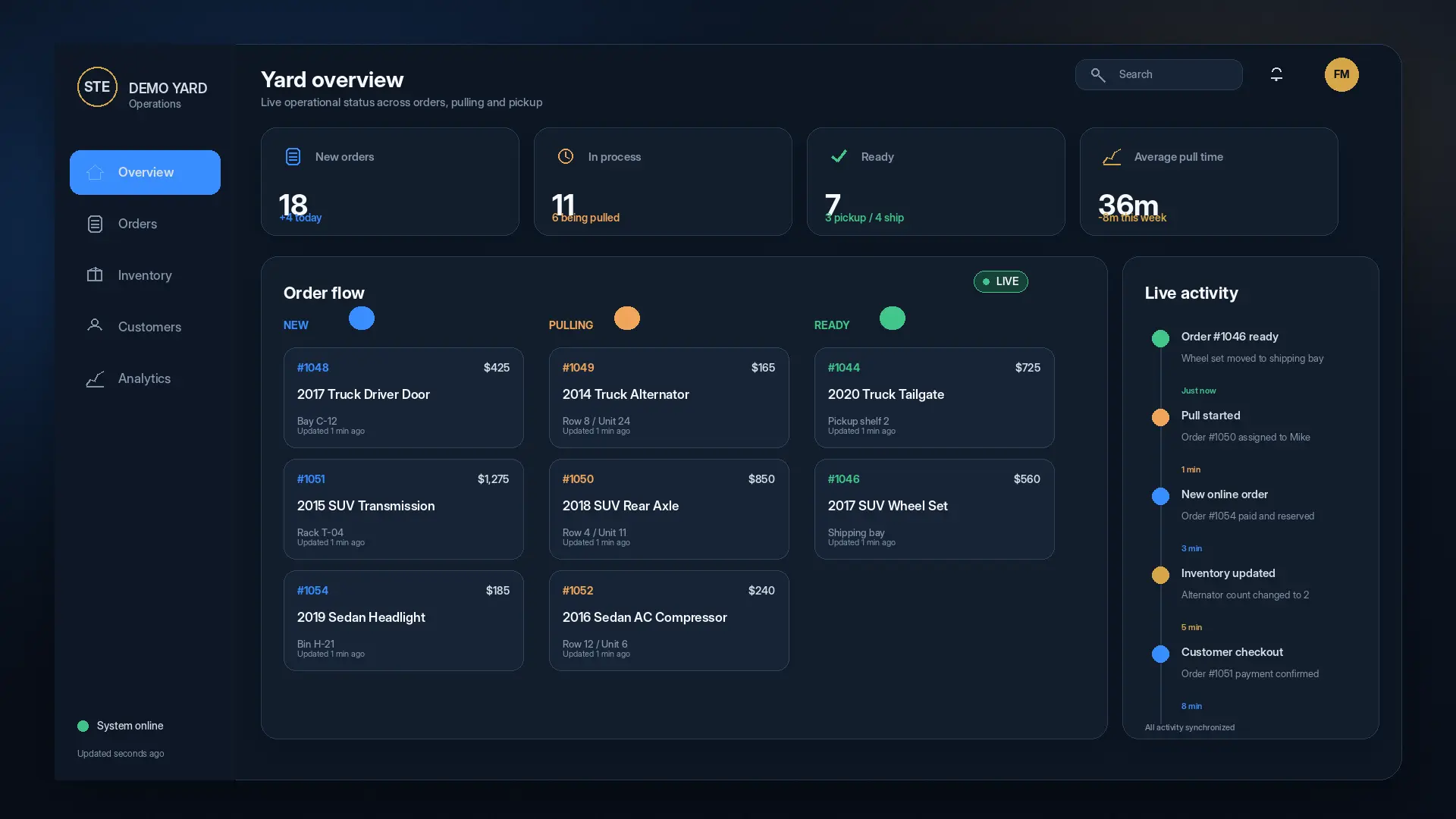
Interface status: This is a high-fidelity representative product visual. A client implementation is configured and validated against the yard's real inventory fields, payment path, staff workflow, and deployment environment.
This extended feature showcase connects the customer experience, day-to-day yard workflow, and business value behind a focused launch.
A design-partner pilot can focus on one inventory category or vehicle group, making it possible to test customer search, staff handling, and order flow before expanding the scope.
The usual sequence is discovery and field mapping, configuration and sample import, staff review and soft launch, then a measured operating review. Integrations and custom workflows are scoped separately.
No. The first value can be a cleaner customer-facing catalog and a focused order workflow while existing systems remain in place. Integration or replacement decisions come after discovery.
That is why the pilot starts small. One controlled category makes it possible to agree on fields, ownership, update habits, and customer visibility before attempting a broader import.
No. The system can begin with reservation or deposit workflows and staff confirmation. Full online checkout is appropriate only when inventory accuracy and fulfillment rules support it.
Independent and mid-sized salvage yards that want a modern branded catalog, fewer manual lookups, clearer order status, and a practical path to better operating data.
Show us how inventory, calls, pull work, and customer orders move through your yard today. We will identify the cleanest pilot scope and the evidence needed to expand it.